Professional development has always been at the heart of teacher growth. From workshops and coaching sessions to structured learning communities, PD gives educators the knowledge, frameworks, and strategies they need to thrive in the classroom. Schools invest significantly in these experiences, and for good reason. The research is clear that well-trained, confident teachers are the single greatest in-school factor in student success.
But even the best professional development faces a challenge that the education field hasn't fully solved yet. And it's not about the quality of the training.
The Gap Between Knowing and Doing
Talk to any experienced teacher and they'll tell you the same thing. They've sat through valuable workshops. They've learned evidence-based strategies. They've taken notes, discussed scenarios, and left feeling ready. Then Monday morning arrives, a student is escalating in the back of the room, and everything they learned feels just out of reach.
That's not a failure of the teacher nor is it a failure of the training. It's a fundamental truth about skill-building that we've long understood in fields like medicine, aviation, and athletics, but have been slower to apply in education.
Knowing something and being able to do it under pressure are two very different things. And the bridge between them is practice.
A surgeon doesn't perform their first procedure on a patient without extensive simulation beforehand. A pilot doesn't navigate their first storm without hours in a flight simulator. The stakes are too high and the skills too complex to leave execution to chance. We accept this without question in those fields. Yet in education, we routinely ask teachers to execute some of the most nuanced, high-stakes interpersonal skills imaginable. De-escalating a dysregulated student. Navigating a difficult parent conversation. Delivering corrective teaching in the moment. And we expect them to figure it out in real time, with real kids, often alone.
What the Research Tells Us
John Hattie's landmark research into what actually moves the needle in education points to teacher confidence and self-efficacy as among the strongest predictors of both effectiveness and longevity in the profession. Teachers who believe in their ability to impact students stay in the classroom longer, build stronger relationships, and produce measurably better outcomes.
The inverse is equally true and far more urgent. When teachers don't feel capable of handling the hardest moments of the job, burnout follows. Not because they don't care. Most teachers care deeply. But caring isn't enough when the skills feel shaky and the stakes feel impossibly high. Retention doesn't suffer because teaching is hard. It suffers because teachers aren't given enough opportunity to build genuine competence before they're tested by it.
The Space That's Been Missing
What if the answer isn't more professional development, but a different kind of experience that sits alongside it?
Every great PD experience surfaces important knowledge. Teachers learn frameworks, observe modeled strategies, and engage in meaningful discussion. But the session ends, the workday resumes, and the next opportunity to try those strategies is in front of 25 students, where a misstep has real consequences for real relationships.
What teachers have largely been missing is a safe place to practice.
A space where they can try a de-escalation approach, hear honest feedback, adjust, and try again without any risk to a student's emotional experience or a teacher's professional standing. A space where stumbling is not just acceptable but expected, because that's how skills are actually built. A space where the reps can happen privately, repeatedly, and at whatever pace works for that individual educator.
This kind of deliberate practice environment is standard in nearly every other high-stakes profession. In education, it has largely been the missing piece.
The Answer
Boys Town's Reality Coach was built to fill exactly that gap.
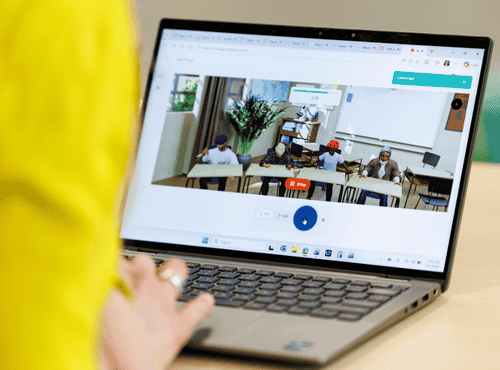
Reality Coach is a web-based, interactive practice and coaching platform that gives teachers a place to rehearse the moments that matter most. Behavior redirection, de-escalation, corrective teaching, parent conversations, and more. All on their own device, at their own pace, and without any risk to relationships or learning. It doesn't replace great professional development. It's the bridge that connects learning to doing.
Teachers choose realistic scenarios, role-play using their own words, and receive clear, actionable coaching feedback aligned to Boys Town's evidence-based classroom management strategies. Because the platform is gamified, adaptive, and grounded in progressive skill-building, educators build momentum and experience genuine mastery overtime. Each short session sharpens instincts and strengthens the specific skills that make the hardest classroom moments manageable.
For school and district leaders, Reality Coach offers scalability and consistency that coaching alone can't always provide. District-level controls, growth analytics, and evaluations tied to evidence-based practices make professional learning measurable and predictable, regardless of which school a teacher is in or who their instructional coach happens to be.
Confidence Is the Outcome
When teachers have a safe space to practice, when they can stumble, adjust, and grow without consequence, something shifts. The strategies that once felt theoretical start to feel instinctive. The moments that once triggered anxiety start to feel manageable. And the confidence that research shows is essential to teacher retention and effectiveness becomes something that's been earned, not just encouraged.
Professional development plants the seed. Practice is what makes it grow.
Great teachers don't just need to know what to do. They need the space to practice until they can do it. Reality Coach delivers exactly that, one conversation at a time.